
Sermons
November 30, 2025 (First Sunday of Advent)
“You’re old, but you’re wise.”
Colossians 1:9-20
In Sac City, we had a combined youth group—the Christian, Methodist, and Presbyterian churches all worked together to operate it. The program was overseen by a council made up of the pastors of the participating churches, plus two representatives from the membership of each church.
(One year, for some reason, four of the six lay representatives on the council were named Carol. Of the other two, one was a man, and the other was a woman named Jackie. We were kidding around one day and told Jackie we expected her to change her name to Carol so she’d fit in; she jokingly agreed to, as she said, “take one for the team.”)
There was a point when the youth council felt like the younger age group needed some more adults to be there when they met. They weren’t expected to be teachers or lead games; they were just supposed to eat snacks with the kids or help with crafts, or just be available for the kids to talk to.
One of my church ladies, who had been a leader in the youth group for years but had sort of retired from the role, agreed to go and hang out with the kids on Wednesday afternoons. The kids liked her, and would often sit and talk with her.
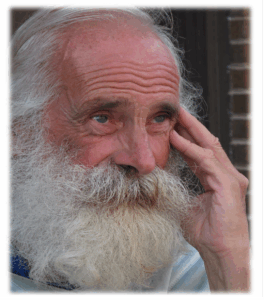
So one day a very serious little boy named Jaden came and sat with Bev and asked her a question. I don’t remember what the question was, but after Bev gave her answer, he looked at her for a moment and said, “You’re old, but you’re wise.”
He was right, and I had occasion to benefit from her wisdom plenty of times while I was there.
There was a controversial ecumenical conference held in Minneapolis in 1993, in which participants considered how to speak of the feminine nature of God.
The whole notion of “the feminine nature of God” was part of the reason the conference stirred up such drama in churches and denominations. Some folks have a hard time even considering that God has a “feminine nature”—but remember that, while God is never directly referred to in the Bible with feminine names like Mother or with female pronouns (she, her), in Genesis we are told that God created humanity, male and female, in God’s own image. This suggests that God does have a feminine nature—while at the same time the reality of God is beyond the whole idea of human gender.
In any case, what the folks at the “Re-Imagining” conference settled on was that Wisdom, personified as a woman in the book of Proverbs and other wisdom literature, such as what Carol read for us a moment ago, might offer a way to imagine God’s feminine nature.
Perhaps.
I wasn’t at the conference, and was a little bit too preoccupied in the spring of 1993 to pay much attention to the fallout, so I’m not prepared to offer any opinion about it.
What I will say is that Christian tradition has revered Wisdom as an aspect of God for centuries. The “O” Antiphons we are focusing on during the Advent season this year demonstrate that. They were part of Christian worship and prayer as far back as the 700s, although nobody knows for sure where they came from or who might have originally written them. And there are places in the New Testament, including our reading for today from Colossians, in which the idea of Wisdom is connected with Jesus’ incarnation—in other words, in a sense Christ is God’s Wisdom in human form.
The prose poem at the beginning of the Fourth Gospel, which we hear on Christmas Eve when we light our candles at the end of the service, is similar. God’s Word made flesh, God’s Wisdom present at creation, reconciler of humanity to God through his life and death, destroyer of death by his resurrection—that’s what we see in Jesus Christ.
So the question is, how does the “O” Antiphon about God’s Wisdom personified in Jesus relate to the theme of the first Sunday of Advent, which is Hope?
I don’t know if you’re aware of the “Banished Words List” released each year by Lake Superior State University. This year’s list includes such gems as cringe, era, and sorry not sorry. (As you can see, it’s not always just single words.) I actually got a submission included in the list some years ago,[1] and have submitted a couple for the 2026 list.
Seems like I first became aware of the list when “high tech” was one of the banished phrases, probably around 1990. The archive on LSSU’s website only goes back to 1991, though, so that’s all I can say.
Somewhere around the same time, if I remember correctly, “conventional wisdom” made the list. It certainly would have deserved it; in the early 1990s that phrase was everywhere, particularly in discussions about politics. Generally the point was that “conventional wisdom” was often wrong, and I thoroughly agree with that. But conventional wisdom persists.
“Everybody knows”…whatever—it’s conventional wisdom.
The conventional wisdom at my seminary in Portland was that “Disciples don’t believe in anything,” or maybe “You don’t know what you believe.” “Everybody knows that,” I was told by a classmate from a more evangelical tradition, the kind of tradition where there is a set of beliefs everybody has to agree to about God, about Christ, about the Atonement, about the Bible, about the role of men and women in church, and so on. We don’t have a set of beliefs like that, and that just didn’t compute with people from evangelical churches.
I actually had a classmate tell me one time that our lack of a formal statement on the inspiration and authority of Scripture was a sign of “a tradition in its infancy.” He didn’t respond when I pointed out that the Christian Church (Disciples of Christ) is actually older than whatever denomination it was that he belonged to, by over a century.
“Conventional wisdom” in American politics tells us that one of our parties is Christian, but the other isn’t. (Reality, of course, is that there are Christians in both the Democratic and the Republican party, and neither party can claim Jesus Christ as a member.)
“Conventional wisdom” is that life is difficult, a long, hard slog through work, stress, anxiety, financial worries, and declining health; and then you die. (There is, of course, a much shorter and more colorful way of expressing that, but it’s not exactly appropriate to say in a sermon.)
And for heaven’s sake, if that conventional wisdom is the truth, then we can understand why there are a lot of folks in our world today for whom just getting out of bed of a morning has become an almost impossible chore.
I think we could argue that “conventional wisdom” is not the kind of wisdom that is personified in Jesus Christ.
Where conventional wisdom says, “Nobody is coming to save us; we’re on our own,” Colossians 1 tells us that in Christ God has rescued us from sin and death, and through Christ “God was pleased to reconcile to himself all things…by making peace through the blood of his cross.” In other words, when God’s Wisdom came to earth as a human being, Jesus of Nazareth, Somebody came to save us.
Nor are we stuck trudging through a joyless, colorless existence until finally we draw our last breath. No, God’s Wisdom, embodied in Jesus Christ and continuing through the presence of the Holy Spirit, is with us to strengthen us, teach us, and give us glimpses of the joy that we may now know only in part, but one day will be ours fully and eternally.
That’s how wisdom and hope join together in the expectant time of Advent.
O Wisdom, O holy Word of God,
you govern all creation with your strong yet tender care.
Come and show your people the way to salvation.
[1] https://www.lssu.edu/resources/about-lssu/traditions/banishedwords/. At this link you can find the 2025 list and a link to the archive of all the lists back to 1991. My submission was “we’re pregnant” to the 2007 list”: “You may both be expecting, but only one of you is pregnant.” Sadly, even though the phrase was included on the banished words list, it’s still out there.