
Sermons
August 31, 2025 (Proper 17)
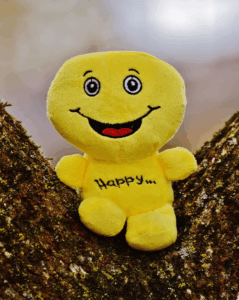
Happy, Happy, Joy, Joy
John 15:1-11
It’s interesting to me how much pop culture from my formative years—music, movies, television shows, even books[1]—haven’t worn too well over time.
When I was in the hospital after my first knee replacement, I was awake during the night and had the TV on. Scrolling through the available channels, I happened onto a movie I had enjoyed when I was a teen, Sixteen Candles. A patient care specialist (what I think is called a CNA in other facilities, although I sort of like the other name better) came in, and we were talking a little about the film, and while she said she liked it, I realized that there’s some stuff in there 1983 me thought was hilarious, but that 2021 me found highly appalling.
You probably know the basic plotline: Molly Ringwald as Samantha Baker looks forward to celebrating her 16th birthday, but it’s overshadowed by her big sister’s wedding the next day. But there are some problematic bits, like the horrific portrayal of an Asian exchange student (even his name is inappropriate to say in a sermon), and the way an extremely drunk girl is treated by her boyfriend and another character.
Even so, one scene sticks in my mind. Samantha is talking to her best friend about how her whole family has forgotten her birthday. She’s describing how she expected her “sweet sixteen” to be, and how it was supposed to be such a happy day. She was, of course, bitterly disappointed, and told her friend, “I can’t get happy.” She was supposed to be happy, but she wasn’t, because everything had gone wrong from the minute she woke up that morning.
Even her grandparents forgot her birthday, and, as she said, “They live for that”…err…stuff.
This illustrates one problem with the whole idea that “God just wants us to be happy,” something that is not really in the Bible. There are actually quite a few problems with it, which we’ll get to shortly.
Yes, sometimes the words that older English versions rendered as “blessed” in places like Psalm 1 and the Beatitudes are translated as “happy,” but does that mean that God’s main goal for our lives is for us to be happy? What does it even mean to be happy? What makes us happy? And are the things we think will make us happy actually what God wants for us?
One of the books I’ve been reading in preparation for this sermon series describes a conversation the author had with one of the deacons in his church.[2] The deacon came to Pastor Russell to tell him he was resigning his position as deacon, and leaving the church. Why?
“He was moving out of the home he shared with his wife and his two teenage children and moving in with another woman.”
He knew this wasn’t right, and he knew it was contrary to how a deacon in the church was meant to behave. He knew that he was going to ruin relationships not just with his wife and kids, but with friends and extended family. But he was going to do it anyway.
Pastor Russell was baffled and asked him why. Why, when he knew how it was going to affect his relationships and his life, was he choosing to do such a thing?
“Because,” the deacon said, “I’m not happy with my wife. But my girlfriend makes me happy. And I believe God just wants me to be happy.”
Really? That’s what God wants?
Now I know marriages break down. I know divorces happen, and I know sometimes they are necessary. I know relationships with extended family can be strained when somebody takes actions the family doesn’t understand or support,[3] and sometimes those actions are needed even if family objects. But to throw a home, a family, a circle of friends, a church away, deliberately, and justify misbehavior by saying, “This makes me happy, and God wants me to be happy”?
I have to wonder how long happiness built on that kind of wreckage will last. Does God really want us to be happy like that?
Russell Muilenburg says another problem with the idea that happiness is the be-all and end-all of God’s will for us is that it’s just not found in the places where the world thinks it can be found. That’s pretty clearly described in the book of Ecclesiastes. The point of that book is to try and determine what a good life is. And the Teacher, what people commonly call the author of Ecclesiastes, says this in chapter 2:
I said to myself, “Come now, I will make a test of pleasure; enjoy yourself.” … Whatever my eyes desired I did not keep from them; I kept my heart from no pleasure, for my heart found pleasure in all my toil, and this was my reward for all my toil. Then I considered all that my hands had done and the toil I had spent in doing it, and again, all was vanity and a chasing after wind, and there was nothing to be gained under the sun.[4]
You might remember a song from years ago, in which a person describes various experiences they’d had over the course of their life, all the things they had done and were doing, and then in the chorus asks, “Is that all there is?” I think the song could be interpreted in a different way,[5] but that one line sort of encapsulates what the Teacher in Ecclesiastes found: If by happiness we mean a state of feeling good all the time, never having to struggle, never lacking in material things, then it is, quite simply, empty. How many people rattle around mansions with luxury cars in the garages, with all they’ve ever wanted at their fingertips, and realize none of it sends them into ecstasy like they thought it would?
Is that what God wants for us?
And then there’s what Samantha Baker in Sixteen Candles found. There are times when we just aren’t happy, and we can’t get happy.
It’s the reason why a lot of churches these days offer a “Blue Christmas” or “Longest Night” service during the holiday season. There’s a lot of pressure at that time of year to be merry, to be happy…and some people find that circumstances in their lives make it impossible to get happy.
Would that mean they’re not doing God’s will? If “God wants us to be happy,” what if we can’t get happy?
This can lead to a lot of wounded people drifting around wearing masks to hide the fact that they’re not happy. We’re supposed to be happy! God wants us to be happy! And when we look around us and everyone else seems to be happy, but we’re not, we don’t want to bring them down, so we pretend we’re happy even when we’re not. Or we just stay home and keep our misery to ourselves, which isn’t always the healthiest thing.
If people were really honest, we’d probably realize that a lot of us are wearing those same masks, pretending to be happy when we’re really not, just to avoid raining on someone else’s parade—and maybe even to avoid disappointing God who, after all, “just wants us to be happy.”
There are churches filled with people wearing these kinds of masks. When someone who belongs to a church like that struggles, they may stop attending church, because they look around and all they see is smiling faces, but they just can’t pretend they’re fine. Visitors who are walking a difficult path don’t return to churches like that. They may think, as a person Philip Yancey described at the beginning of his book What’s So Amazing About Grace?[6] said, “I was already feeling terrible about myself. They’d just make me feel worse.”
Yet struggling people, hurting people, broken people, people with problems no one on earth could fix flocked to Jesus! Why?
Because he “just wanted them to be happy”? No! Because he saw their brokenness and loved them through it!
I think we would do well to return to the older translations of the words that modern versions of the Bible tend to render as “happy.” So the Beatitudes become, again, “Blessed are the poor in spirit,” and so on, and the opening of the first psalm tells us, as the United Methodist Hymnal’s Psalter says,
“Blessed are those who do not walk in the counsel of the wicked,
or stand in the way of sinners,
or sit in the seat of scoffers…[7]
If we make this one small adjustment, it might help us see that it’s not that God wants us to feel happy all the time—it’s even better! God wants to bless us. And God’s blessings aren’t just about happiness.
They’re about being given strength when we’ve got more trouble than we can handle on our own. They’re about being accepted when our lives are a mess, and given help to straighten them out. They’re about communities of people—families, churches, circles of friends, you name it—coming together to bear each other’s burdens. They’re about opening our hands to people in need—and having others’ hands opened to us when we are in need. They’re about being surprised by joy[8] in the midst of sorrow, times when we can’t—and don’t really need to—get happy, but find moments of love, good memories, expressions of concern from others, that sustain us when it’s hard to put one foot in front of the other.
God doesn’t necessarily “just want us to be happy”; God wants so much more than that for us: God wants to bless us, and bring us joy.
[1] There’s been a recent push to take the Little House books by Laura Ingalls Wilder out of schools because of how they portray White settlers’ attitudes toward Native Americans—specifically, Laura’s Ma’s repeated statement that “The only good Indian is a dead Indian.” These books were favorites of mine growing up, and while I acknowledge that statement is problematic, and there are other matters relating to how the Ingalls family thought about and related to Indigenous people that are troublesome (like the fact that the site of the second book, Little House on the Prairie, was Osage land in southeastern Kansas, and the family had settled there illegally and were required to leave by the United States government), I think it’s better to read the books and help kids understand that those sentiments and behaviors might have been acceptable in their time but are no longer, and why.
[2] Russell Muilenburg, Misquoted: Things we think are in the Bible, but are not (Anchoring Hope Publishing, 2022), pp. 35-36.
[3] Family Systems Theory would say this happens more often than we would like to think, like when an addict chooses to get clean and sober. In a case like that, the equilibrium in the family is thrown off by the addict’s very healthy decision; and the family system fights tooth and nail to restore that equilibrium and put the addict back in their designated place in the system. This is why some addiction treatment programs work not just with the addict but with their family.
[4] Ecclesiastes 2:1, 10-11
[5] There are some interesting discussions recorded online about the meaning of this classic song by Peggy Lee.
[6] Philip Yancey, What’s So Amazing About Grace? (Grand Rapids, MI: Zondervan, 1997), p. 11—quoting himself from an earlier book, The Jesus I Never Knew.
[7] Also lost in translation in many newer versions is the vocabulary of movement in this first section of the psalm: “Blessed are those who do not walk…stand…sit…” as unbelievers do.
[8] Hat tip to C.S. Lewis for this phrase.